



A dental bridge is a restoration designed to replace one or more missing teeth by anchoring to the adjacent natural teeth or dental implants. It helps restore your smile, chewing function, and overall dental health.
Types of Dental Bridges
- Adhesive Bridge (Maryland Bridge)
This type of bridge requires minimal or no preparation of the adjacent teeth. It is fabricated in a dental laboratory and then bonded to the neighbouring teeth. The main advantage of an adhesive bridge is that it is non-invasive, preserving as much of the natural tooth structure as possible. This type of bridge is often used for front teeth where aesthetics are a priority. - Fixed Bridge
A fixed bridge requires shaping of the adjacent teeth or implants to create a secure fit. The bridge is then permanently attached using dental cement, adhesive, or screws. Fixed bridges are generally used for back teeth, as they are strong enough to withstand the pressure of chewing.
Materials Used for Dental Bridges
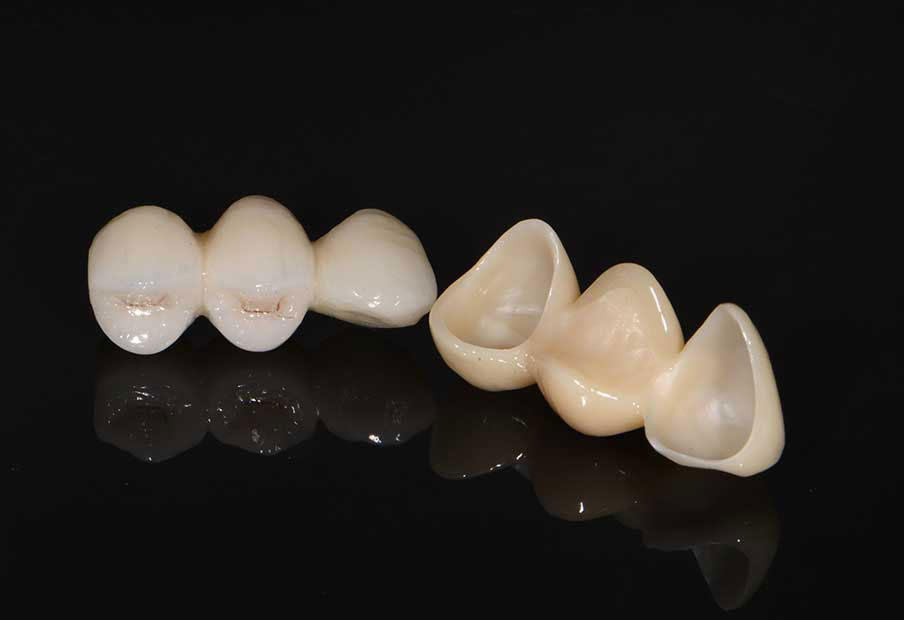
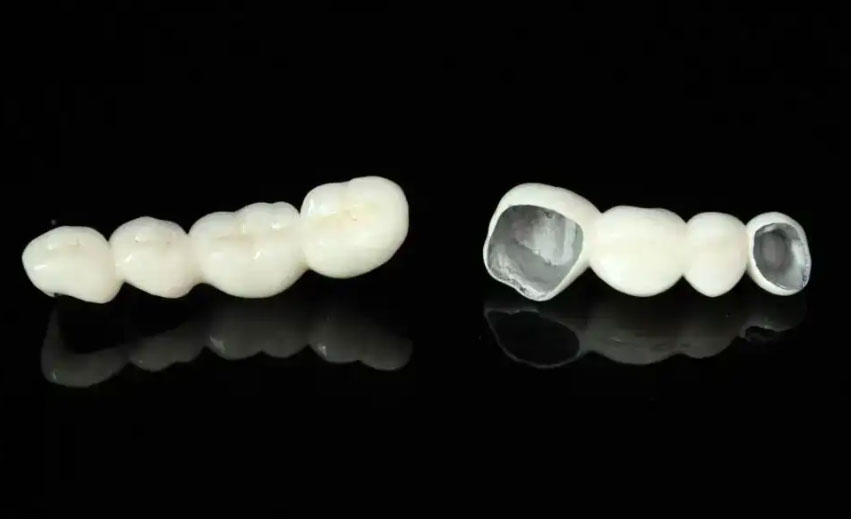
- Porcelain bonded to metal alloy
These bridges have been used successfully for many years. They offer an excellent combination of strength, durability, and aesthetics, making them ideal for teeth with a strong bite or significant discoloration. - Porcelain only
Porcelain-only bridges bond strongly to the tooth, providing both support and a natural appearance. Advances in ceramic technology, including zirconia and pressed ceramics, have improved their strength, allowing them to be used for both front and back teeth. They are valued for their lifelike, natural-looking finish. - Gold alloy
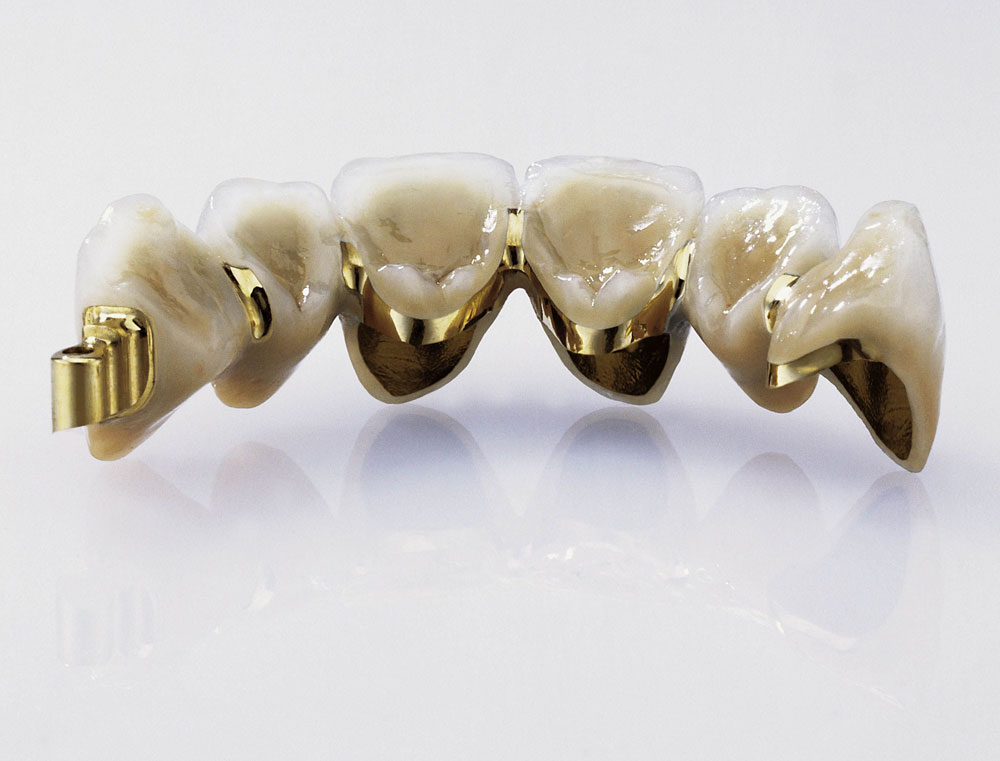
Gold crowns and bridges are made from biocompatible, durable metals. When combined with other metals to form an alloy, they become even stronger. Gold bridges are comfortable, long-lasting, and are typically chosen for areas where aesthetics are less of a concern, such as molars.
Stages of Dental Bridge Treatment
- Initial Dental Consultation
This may take place during a routine dental check-up or when a patient wishes to discuss a specific dental concern. During this appointment, we will review the possible treatment options, explain how a dental bridge can help, and answer any questions you may have. - Dental Examination and Record Taking
A comprehensive examination is performed to assess your suitability for a dental bridge. Dental photographs and impressions are taken and sent to the laboratory to create a diagnostic wax-up. This helps both the dentist and the patient make an informed decision about the precise treatment plan at the next appointment. - Discussion of Treatment Options
Using the diagnostic wax-up and photographs, the dentist will discuss the various treatment options available. A detailed plan is developed, and the patient is given time to consider the choices before proceeding. - Preparation for the Dental Bridge
If preparation of the supporting teeth is required, this is usually done at a separate appointment. During this visit:
-
- The teeth are shaped to accommodate the bridge.
- Impressions, bite records, and photographs are taken and sent to the laboratory to ensure a precise fit and natural appearance.
- Temporary crowns are fitted to protect the prepared teeth.
In some cases, you may be asked to visit the laboratory the following day to ensure the colour of the bridge closely matches your natural teeth.
5. Fitting the Dental Bridge
At the final appointment, the temporary crowns are removed, and the bridge is cemented or bonded to the supporting teeth, depending on the material used. The dentist checks your bite to ensure comfort and proper fit. Final photographs are taken, and after-care instructions are provided to help you maintain your new bridge.
FAQ
How long do dental bridges last?
Typically 10–15 years with good oral hygiene.
Do bridges feel like real teeth?
Yes, they’re designed to function and feel natural.
How do I clean around a bridge?
Special floss or interdental brushes make cleaning around and beneath bridges easy.
Why Us?
At Imperial Dental Care, your smile is our priority. We pair clinical expertise with modern technology to provide dentistry that feels personal, comfortable, and reassuring. Every treatment plan is tailored to you — never rushed and never one-size-fits-all.
Our team is hand-picked for both skill and genuine care. We believe great dentistry is built on trust, empathy, and clear communication. From the moment you arrive, you’ll be welcomed by professionals who listen, respect your concerns, and make your experience smooth and stress-free.
We don’t just treat teeth — we care for people.
Your comfort, confidence, and wellbeing matter here.